6 Years and a Lifetime of Lessons
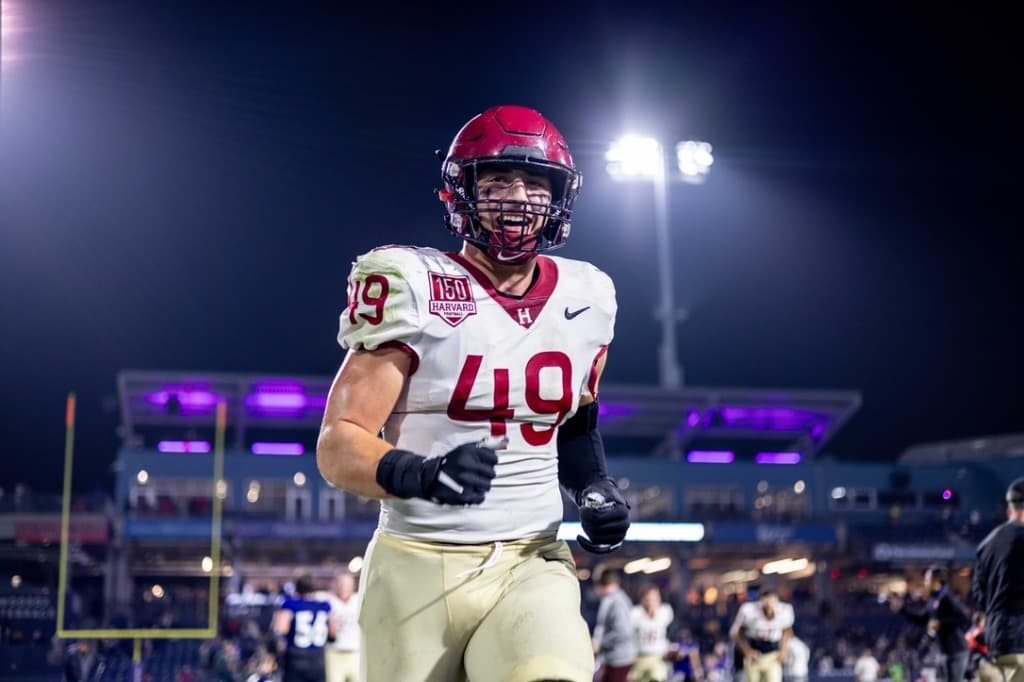
Reflecting on 6 years of college football, from Harvard to Memphis, and the lifetime of lessons learned about leadership, resilience, and earned success.
I came into college football in 2020, when everything was different.
COVID changed the rhythm of the sport. Limited contact. Limited access. Limited normal. And I had a very clear picture in my head of how my career was supposed to start, show up, work harder than everyone, earn a role right away, set the tone.
That is not what happened.
2020 taught me the difference between ready and earned
Not playing early was a punch to the ego. It was also a reality check.
I had the work ethic. I had the confidence. I thought that was enough.
But football does not care what you think you deserve. It cares what you earn, over time, in a system, with people watching every rep. And when the timeline does not match the plan, the only real choice is to either spiral or adapt.
I decided to use it.
Looking back now, that early setback ended up being one of the best things that could have happened. It forced patience. It forced humility. It forced a long-term mindset. It made me obsess over process instead of outcomes.
The hard part is not working hard, it is sacrificing consistently
People talk about hard work like it is one moment.
In reality it is boring. It is repetitive. It is choosing the hard option when no one is watching.
College football, especially at a high academic environment, means time constraints every day. Your schedule is not yours. You are always behind something, class, meetings, lifts, film, treatment, practice, sleep. The only way to survive it is to accept the tradeoffs.
That season made the blueprint clear.
Protect the basics. Be disciplined with the hours. Stack small wins. Keep showing up. Even when nothing changes right away.
Leadership started with habits, not speeches
I never felt like I had to be the loudest voice in the room.
The version of leadership that made sense to me was simple: do the work the right way, every day, and let that set the standard. Be consistent enough that people can trust what you bring. Be accountable enough that people know you are not asking them to do anything you will not do.
Over time, that approach naturally pulled me into leadership roles.
But I also learned that leadership is more than example. Eventually you have to communicate. You have to address the room. You have to hold people to the standard.
That was a learning curve.
In my head, a lot of things are black and white. If someone says they want a goal, the actions should match. When I saw the gap, I used to be quick to call it out directly. Sometimes that works. Most of the time it creates defensiveness, not change.
I had to learn how to correct people in a way that actually helped them improve.
More grace. Better timing. Clearer language. Less emotion. More solution. Still honest, still direct, but framed in a way that people can hear, and act on.
That change made me a better teammate, and a better leader.
Memphis was a new environment, a new perception, and a new test
Transferring to Memphis came with assumptions.
The only thing people knew at first was “transfer from Harvard.” Different background. Different expectations. And to be honest, it did not fit the typical mold of what people expected in that locker room.
So the only way through it was the same way it has always been.
Show up. Work. Learn the culture. Respect the people. Build relationships. Earn trust.
The fastest way to break assumptions is consistency.
Once my teammates knew who I was, and how I moved, the perception changed quickly. I took the time to know people beyond football, what matters to them, what motivates them, what they care about, how they communicate. That matters more than any title.
Over time I was voted into leadership, earned a spot on the leadership council, and became a defensive captain.
That season ended 11-2, ranked No. 22 in the nation, and finished with a Frisco Bowl win. It was a reminder that adapting fast and serving the team still wins, even in a completely new environment.
The foundation for what comes next
Getting the chance to compete at the next level was everything I worked for.
The ending did not go exactly how I wanted. I would have loved to keep playing. But I can say this with a clear mind: everything within my control was done. The work was there. The intention was there. The preparation was there.
Some things outside that, including injury history, made the path harder than I wanted.
But the bigger point is that the foundation is built now.
Years of repetition. Hours of film. Good days, bad days, setbacks, failure, adjustments, and growth. That does not disappear. Those systems carry forward.
Football taught me how to build a standard and live up to it. How to lead without needing attention. How to earn trust. How to adapt when the plan breaks. How to keep going.
And my journey is just getting started.